



The coronavirus pandemic, which emerged recently and is still ongoing, has taught the global pharmaceutical manufacturing industry that collaboration and solidarity are the most important cornerstones of accelerated drug development, and perhaps the core principles that both innovative and off-patent drug manufacturers should embrace when bringing new therapeutics to market, now and in the future.
In response to COVID-19, the landscape of global industry is changing, and of all the industries deemed “essential”, perhaps none is more important at this time than pharmaceutical manufacturing. Of course, a great deal of time and effort is being spent on finding and developing a vaccine against Sars-CoV-2; but at the same time, other patients around the world are still waiting for their regular medicines and prescriptions, the vast majority of which are in oral solid dosage form.
Traditionally, the pharmaceutical industry has relied on batch manufacturing, a complex procedure that requires large, dedicated facilities for tablet and capsule production. Inspired by other sectors, GEA has pioneered the design, construction and implementation of continuous manufacturing (CM) solutions that complement and sometimes replace these systems. In CM, material enters and exits the process simultaneously in order to meet demands for faster product development, lower costs, improved manufacturing economics and greater production flexibility.
The technology enables manufacturers to move to continuous processing in order to improve manufacturing quality effectively and cost-efficiently and to comply with the increasingly strict acceptance criteria imposed by regulatory authorities. Additional advantages include increased OEE, optimised R&D, faster unit production, less waste, flexible batch sizes and reduced cleaning costs and materials.
However, for decades, batch-based production of best-selling solid dosage forms has dominated the industry. The level of profitability did not encourage companies to take the risks of innovating or developing new manufacturing technology. But after the era of blockbuster sales, there is now growing awareness of the importance of material costs during drug development; new drug products are likely to be produced in much smaller quantities, and for novel therapies the eventual development of a scaled-up, made-to-order commercial manufacturing process is not guaranteed.
Pressures of this kind have led to scrutiny of the costs, risks and time constraints associated with traditional batch-based development and manufacturing. In addition, regulators are now giving more support to CM, and manufacturers have begun to realise that their current costs of quality assurance, production, and detection and remediation of out-of-specification product are disproportionately high compared with other industries where these are negligible.
Despite regulatory support and growing evidence in favour of CM so far, hesitation remains. Questions are frequently asked about whether CM is useful for anything other than high-volume, low-cost drugs; about financing during the purchase and installation of suitable equipment; about whether legislators can keep pace with technical developments in continuous processing; and, perhaps most poignantly, about whether the conservative pharmaceutical manufacturing industry can overcome the challenges and benefit from all the advantages of ongoing developments.
Perhaps some companies have not shown the agility or capability needed to adopt CM (continuous manufacturing) because they saw it as a “nice to have” option rather than a core component of their manufacturing infrastructure. Many batch systems have been working perfectly adequately for years and are in constant use. Some say it is too expensive and too complicated. Whatever the outcome, COVID-19 has now changed many of these views. As a catalyst for change, drug manufacturers around the world now better understand the need to respond quickly, produce safely, find effective and high-quality treatments in the shortest possible time and meet the unmet needs of vulnerable patients. Time to market is critical.
The focus has shifted. It is no longer a question of whether it can or cannot be done. It must be done. It is time for change. Regardless of the end product, from over-the-counter and generic drugs to new formulations, the time for continuous manufacturing is now.
Industry 4.0 compatible
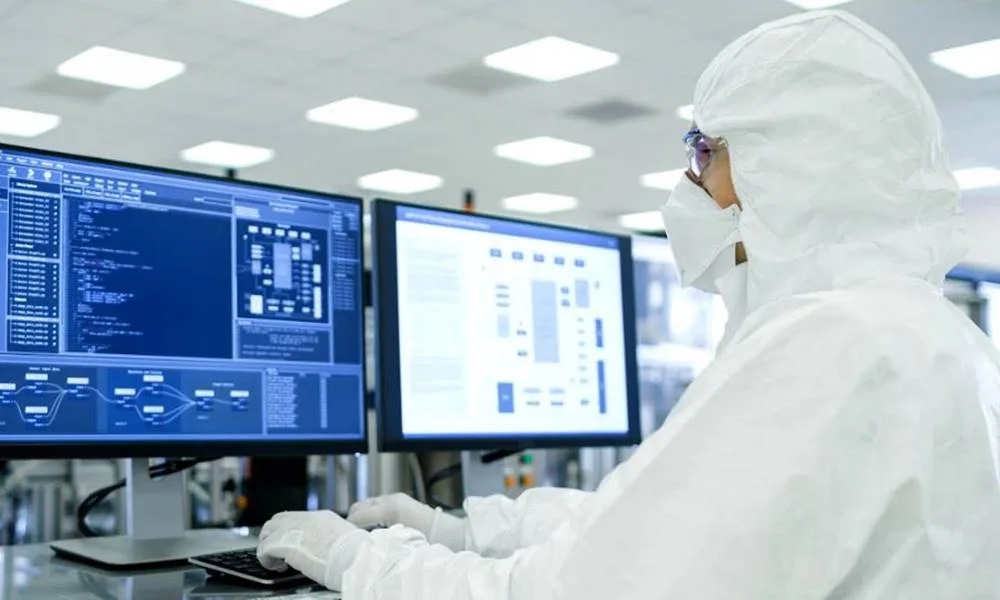
In addition, the pharmaceutical manufacturing landscape is evolving faster than ever before. Much of this change is being driven by greater connectivity and the fourth industrial revolution, Industry 4.0. ConsiGma® 4.0 is ready for the Industrial Internet of Things (IIoT). The ability to capture and analyse data in real time results in faster and more efficient manufacturing processes that produce higher-quality product at lower cost.
Additional advantages include greater supply chain transparency and, together with digitalisation and high levels of automation, just-in-time manufacturing practices that meet the industry’s requirements for shorter development times and product lifecycle management. In-process control of critical quality attributes (CQAs) and the real-time feedback provided by continuous manufacturing technology are now a necessity rather than an option. Speed to market has never been more important.
ConsiGma® 4.0: the future of CM
GEA is wholeheartedly embracing this concept by expanding, integrating and strengthening its ConsiGma® portfolio of oral solid dosage granulation, drying and tablet compression equipment. The multi-purpose ConsiGma® 4.0 platform, designed to turn powder into coated tablets in development, pilot, clinical and production volumes, is now available as a stand-alone unit for specific unit operations or as a modular plant, and can be installed in both new and existing facilities with third-party machines.
In these uncertain times, GEA, a machinery and plant engineering company active on a global scale, has taken its place in the fight against the coronavirus and other extremely serious pandemics. Thinking about the post-COVID world, we have taken a big step by making our most modern CM equipment available to everyone.
With a more holistic and inclusive attitude as a trusted supplier to the pharmaceutical industry, the company can now deliver an unprecedented combination of highly effective, flexible and cost-efficient manufacturing solutions to a wider and more diverse range of companies. GEA can supply best-in-class, fully configurable production systems as well as customer-specific “warehouse-to-warehouse” solutions, and connect them with existing facilities.
Committed to the principle of “engineering for a better world”, GEA and its partners are pioneering smaller, more flexible continuous processing technologies that have the potential to shape the future of pharmaceutical development and manufacturing… and are delivering medicines in customised quantities quickly and effectively to the patients who need them. ConsiGma® 4.0 is the next step on this journey.

Author
Bahattin Küçükkaraca


 Pump Valve and Systems MagazinePompa Vana · September-October 2026Read the latest issue free →